Search for an influencer marketing agency in the UAE and the results read as if the country were one city. Nearly every agency page, directory listing and pitch deck is written in Dubai, for Dubai, and the word UAE is used as a synonym for a twenty minute drive. Buyers in Abu Dhabi, Sharjah and Al Ain are planned for afterwards, and a European brand arriving through Dubai often finds out three months in that it bought a city, not a country.
This is the working version of what changes when the scope is national: what a UAE-wide engagement adds to a Dubai base, how the two media markets actually differ, why the audience here behaves like a set of language communities rather than one national audience, and the federal permit that now sits under every paid creator post in the country.
What a UAE-wide scope actually changes
The federation runs one federal framework for media and seven commercial environments under it. That produces three differences a brand feels in the first month, and none of them are cosmetic.
The first is the licence. Creators here work through a trade licence issued either on the mainland or in a media free zone, and the zone they chose sits inside your campaign paperwork. A roster built with no view of that detail produces contracts that cannot be paid cleanly.
The second is where the campaign is bought. Marketing decisions for retail, tourism and consumer brands concentrate in Dubai, while institutional, government-linked and cultural spend sits much more heavily in Abu Dhabi. A plan tuned only for one buying culture reads as generic in the other.
The third is language. A national campaign runs in Arabic and English at minimum, and often in Hindi, Urdu, Malayalam or Russian as well, because the audience is segmented by community and not only by age. That is a roster question, not a translation question.
How I split a plan between the UAE and the rest of the Gulf is set out on the corridor page. The short version: the UAE is usually the first market a European brand enters, and the second city is what separates a national launch from a Dubai test.
Dubai and Abu Dhabi are two media markets
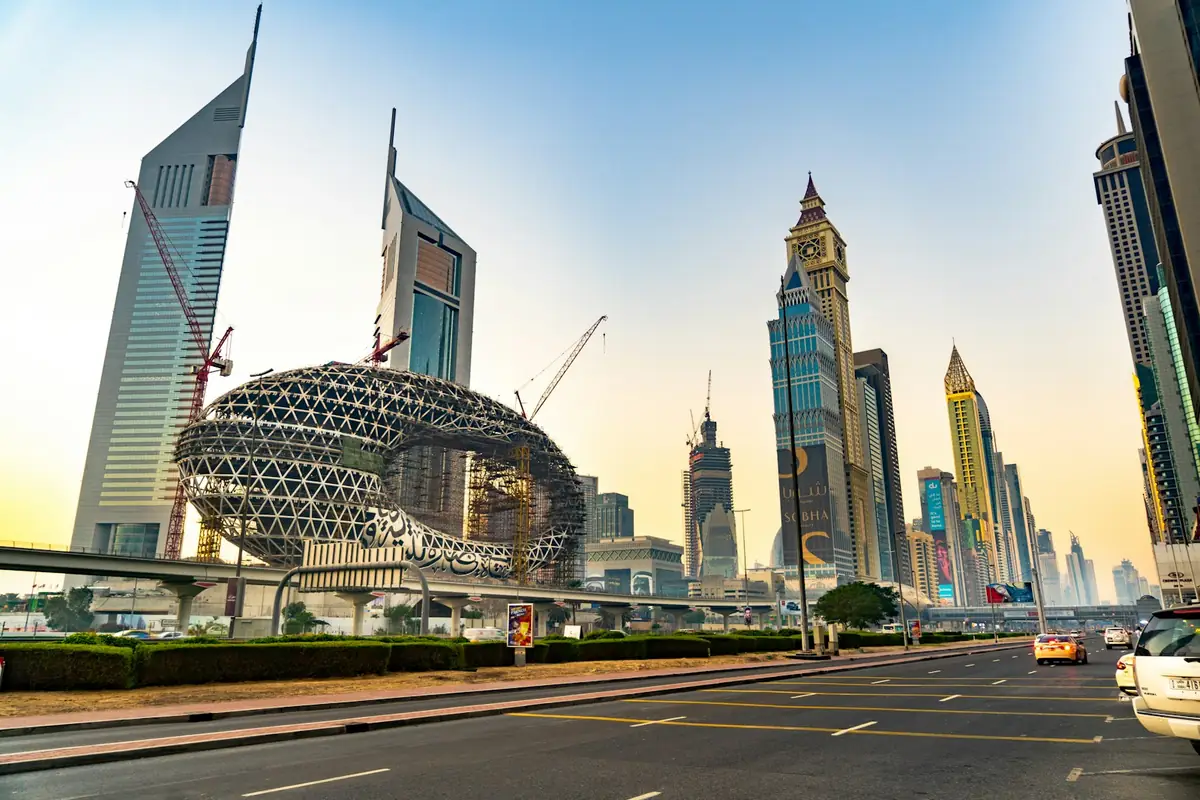
Dubai holds the deepest creator bench in the region and the largest concentration of agencies, production houses and creator managers. Its commercial culture is English-first, its retail and tourism calendar drives most of the seasonal demand, and a large share of the people a campaign reaches are visiting rather than resident.
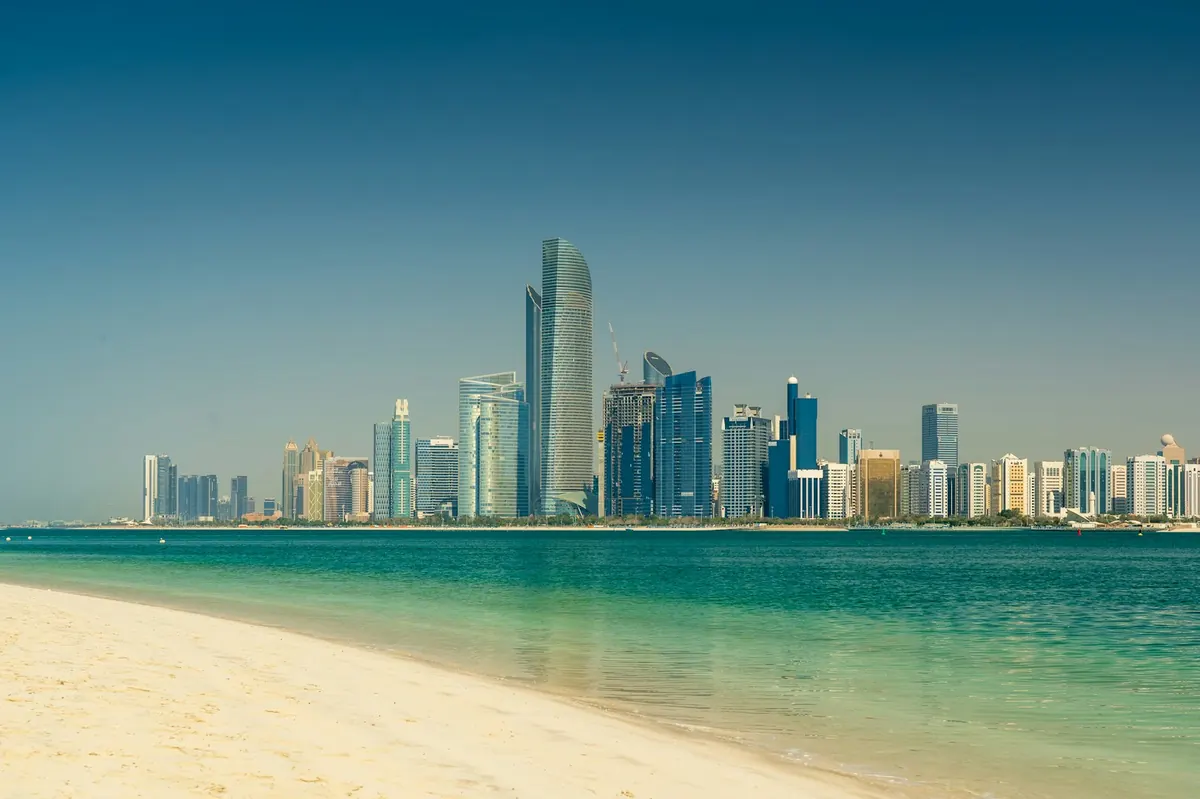
Abu Dhabi behaves differently. Its media free zone, twofour54, sits at Yas Creative Hub and describes a community of more than 800 businesses, with two 600 square metre sound stages on site. That makes the capital the stronger base for production-heavy work, and its institutional buyers tend to brief in Arabic first.
The pattern I see most often is a campaign bought in Dubai, produced in Dubai, and then extended to Abu Dhabi as a paid media line with no creator work behind it. It is the cheapest way to look national and read as absent: the capital audience sees an ad, not a recommendation from someone they follow.
If the brief names Abu Dhabi as a priority market, the creator list has to be built for it. Same country, different rooms.
The audience is not one audience
The national numbers are easy to quote and easy to misread. DataReportal's Digital 2026 report for the UAE, published in November 2025 on data from October 2025, puts the population at 11.4 million, 88.3 per cent of it urban, with a median age of 31.6 and a split of 63.7 per cent male to 36.3 per cent female. Internet use reaches 99 per cent of the population, and the platforms' own ad tools report 12.5 million social media user identities, which is 110 per cent of the population. DataReportal publishes that figure as is, and the excess is the tell: duplicate accounts, business pages and visitors all count as reach.
Platform ad reach in the same dataset: TikTok 12.5 million adults, Facebook 9.70 million, YouTube 8.37 million, Instagram 8.05 million, Snapchat 5.13 million and X 2.85 million. LinkedIn reports 10.0 million registered members, a different unit that cannot be compared with the others.
The number that changes media plans is the gender split. Every platform's adult ad audience in the UAE sits between 61 and 73 per cent male, close to the population split itself. If your buyer is a woman, the reachable audience is roughly a third of those totals, which is why a category aimed at women needs a different roster and a different platform mix rather than a bigger budget on the same one.
Layer language on top of that and the country resolves into communities. Arabic-first households, South Asian communities that follow creators in Hindi, Urdu or Malayalam, Russian-speaking residents, and a large English-first professional audience do not respond to the same faces. A creator with two million followers in one community and none in another is not national reach, whatever the follower count says.
The licensing chain every campaign inherits
The UAE rebuilt its media regulation with Federal Decree Law No. 55 of 2023, in force since 29 May 2025. On 30 July 2025 the UAE Media Council added the Advertiser Permit, the licence that covers publishing promotional content on digital platforms. It is the piece most European brand teams have never heard of, and it sits under the campaign whether or not anyone asked.
In practice the chain runs in one direction. The creator first holds a trade licence covering electronic media or advertising, issued either by a mainland Department of Economic Development or by a media free zone such as Dubai Media City, SHAMS, IFZA, Meydan or twofour54 in Abu Dhabi. With that in place they apply for the Advertiser Permit through the Media Council portal, and the permit number then has to be displayed on the accounts that publish the ads.
The definition of promotional content is broad in the reporting since launch: paid posts, gifted product, barter, affiliate links and discount codes, and unpaid posts that promote a business. Exemptions are narrow, mainly a business owner promoting their own registered company on a personal account. Reported penalties for posting promotional content without a permit start around AED 10,000 for a first offence, while the law's ceiling for serious breaches runs far higher, up to AED 1 million.
One detail matters more to a corridor campaign than to a local one. Visitors can be issued a short-term visitor advertiser permit, renewable every three months, arranged through a licensed UAE agency. That is how a French or German creator flies in for a shoot week and posts legally, and it exists only if the agency on the ground is properly licensed.
The enforcement pressure has already moved down the chain: brands now ask for the permit number before they sign, not after. The wider Gulf picture, including Saudi Arabia's Mawthooq programme, is in my guide to influencer marketing laws across the GCC.
Why the agency's own permit changes the plan
The same reporting makes a point that agency selection rarely accounts for: agencies managing paid brand deals are in scope for the Advertiser Permit themselves, and creators working under an agency that holds one, with a valid contract, are reported not to need a separate permit for that work.
Two consequences follow. First, the agency's licensing status is a campaign asset, not paperwork. It is the difference between a roster that can post legally on Friday and one that cannot post at all. Second, the informal middleman, the one with a WhatsApp group of creators and no trade licence, is not a cheaper route to the same outcome. He is a route to the brand holding the exposure.
So the order of due diligence changes. Check the trade licence and the permit before the creator list, and put both numbers in the scope of work alongside the contract chain. What a managed engagement covers on my side, from licensing to reporting, is on the services page.
Dubai agency, Abu Dhabi studio, European agency
A Dubai base buys the fastest access to creator inventory and the widest bench of producers and editors. The trade-off is that most pitches in the city are built from the same few hundred names, so differentiation has to come from the brief rather than the list.
An Abu Dhabi base buys proximity to institutional buyers and serious production capacity, and it usually means Arabic-first creative. For a campaign built around film, studio work or government-adjacent audiences, the capital is the better base and I say so when it is.
A European agency serving the UAE buys you a partner who understands your home market, and it is the right structure when the campaign is led from Europe. What it cannot buy is the local licence chain, local creator contracts or the visitor permits, so those have to be sub-contracted to a licensed UAE agency, and someone has to own the seam.
The honest version of the choice: the base should follow the audience and the production, not the nationality of the brand team.
What to ask before you sign
Eight questions separate a UAE agency that can run a national campaign from one that can only run a Dubai one. Ask them in writing and keep the answers in the contract.
- What is your trade licence number, and do you hold the Advertiser Permit? Ask for the documents, not the assurance.
- Who signs the creator contracts, you or me, and whose name sits on the permit for each post?
- How do you handle a creator who is licensed in the UAE but not cleared for Saudi Arabia, if the campaign crosses the border?
- What happens with a creator visiting from Europe: who arranges the visitor permit, and how long before the shoot?
- What usage rights are included: which territories, for how long, and does paid amplification count as extra?
- Who owns the raw footage and the edits after the campaign ends?
- Is the creative written in Arabic first, or translated from an English script?
- What is the postponement position around Ramadan and Eid, when creator inventory is booked a quarter ahead?
Question four is the one most European brands forget to ask, and it is the one that decides whether a shoot week in Dubai can publish at all. A longer version of this checklist, including how a retainer should be built, is in my guide to choosing an influencer marketing agency in Dubai.
How to brief and measure a UAE campaign
A brief that names creators before it names a measure will end in an argument about results. Fix the order: the city, the language community, the buyer, the one number that decides success, and only then the creators and the budget.
Four decisions make the campaign readable afterwards.
- Choose one primary measure. Completed views, cost per reply, code redemptions or sessions on a tagged landing page. One, not four.
- Set the geography honestly. A national push on a single-city budget is a rounding error in the second city.
- Start with one language community and do it properly. Two half-built rosters measure nothing.
- Run a pilot before the season: three to five creators, one city, two weeks, then read the evidence before the main budget moves.
Reporting should join two systems that usually stay apart: the platform's delivery numbers and your own analytics or redemption data. Delivery alone cannot tell you whether the campaign sold anything. Creator fees are market data rather than mine, and the working ranges by tier are in the guide to influencer marketing costs in Dubai.
If you are building a UAE plan from Europe and want the scope question settled before the media budget is fixed, send over the category, the emirate and the outcome you need. I will tell you plainly whether a managed creator campaign is the right next step. If it is, a 15 minute brand call is enough to scope the first pilot.
Dubai-based entrepreneur building the Europe-GCC influencer corridor. Multilingual strategist working across both markets with creators who fit them.
Want deeper insights?
Get corridor strategy recommendations for your brand.